
Kip Fieldstone’s Field Book
The Field Book
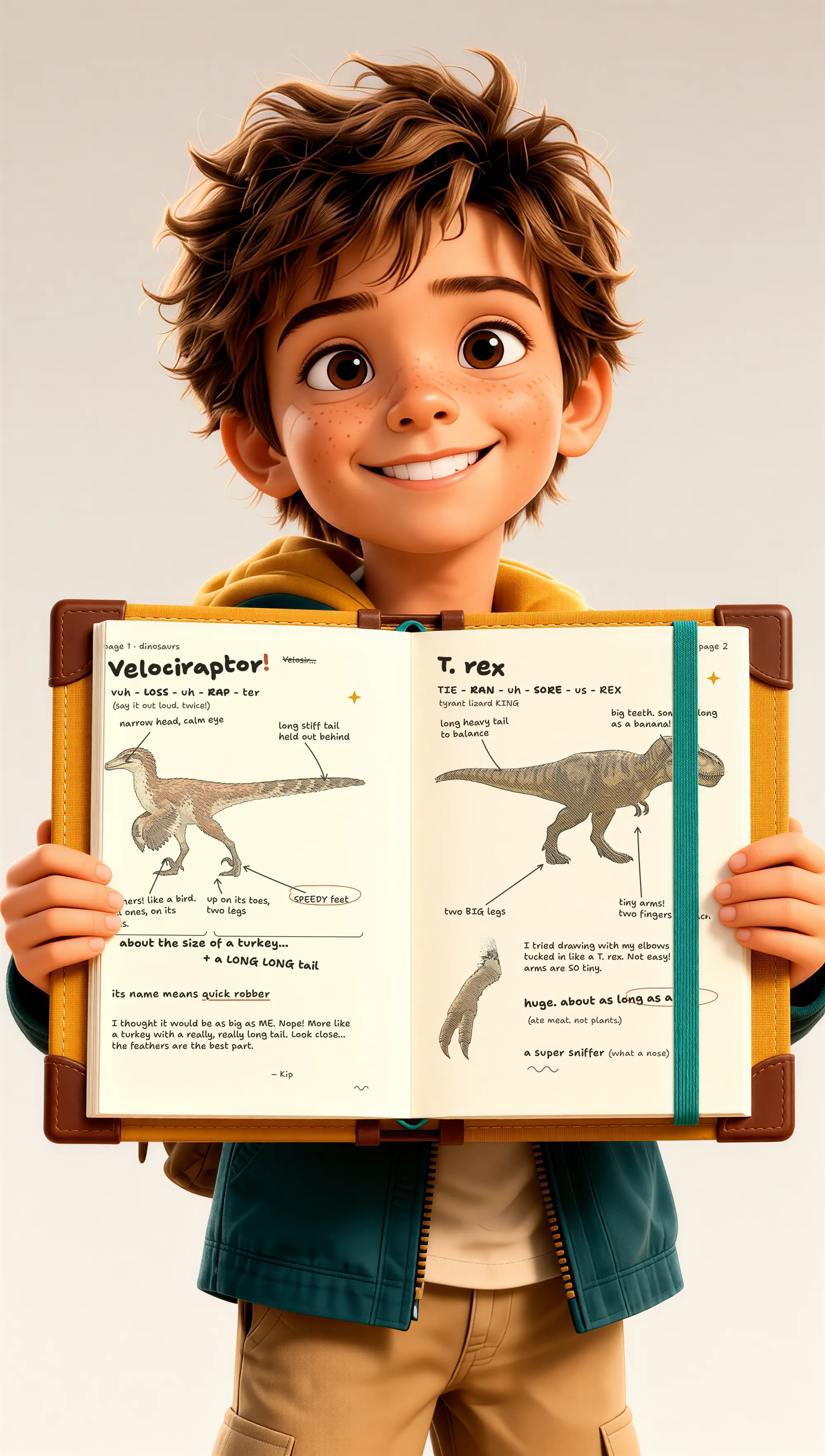
Every discovery Kip makes goes in here. The pages below are the tidy versions we make from his notebook: the enormous names in sound chunks you can say together, a few true things museums agree on, and sheets to print and fill in yourself.
Kip’s dinosaur pages
Two things live under the name Field Book. The notebook Kip carries is his own: drawings, arrows, scribbles and what he thought at the time. These pages are the published versions: the same discoveries, organized, checked against museum sources, and ready to read or print.
- page 1
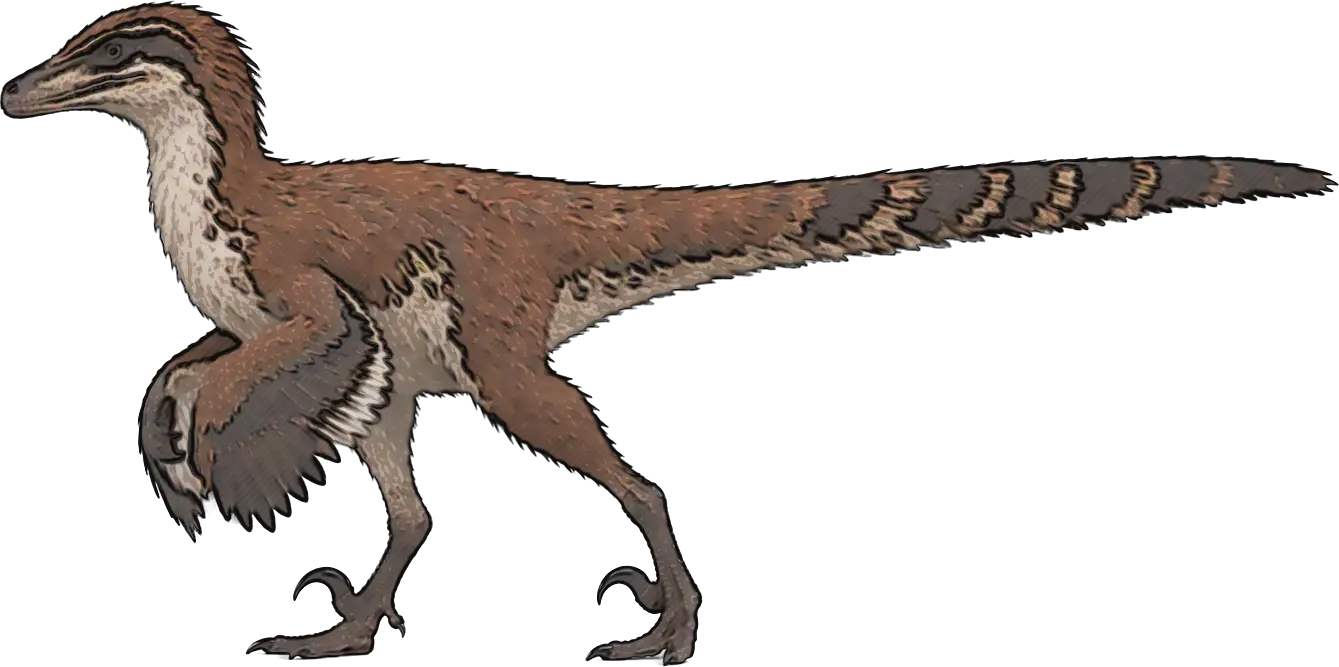 Velociraptorvuh-LOSS-uh-RAP-terA small, feathery dinosaur with speedy feet and a very long tail.
- page 2
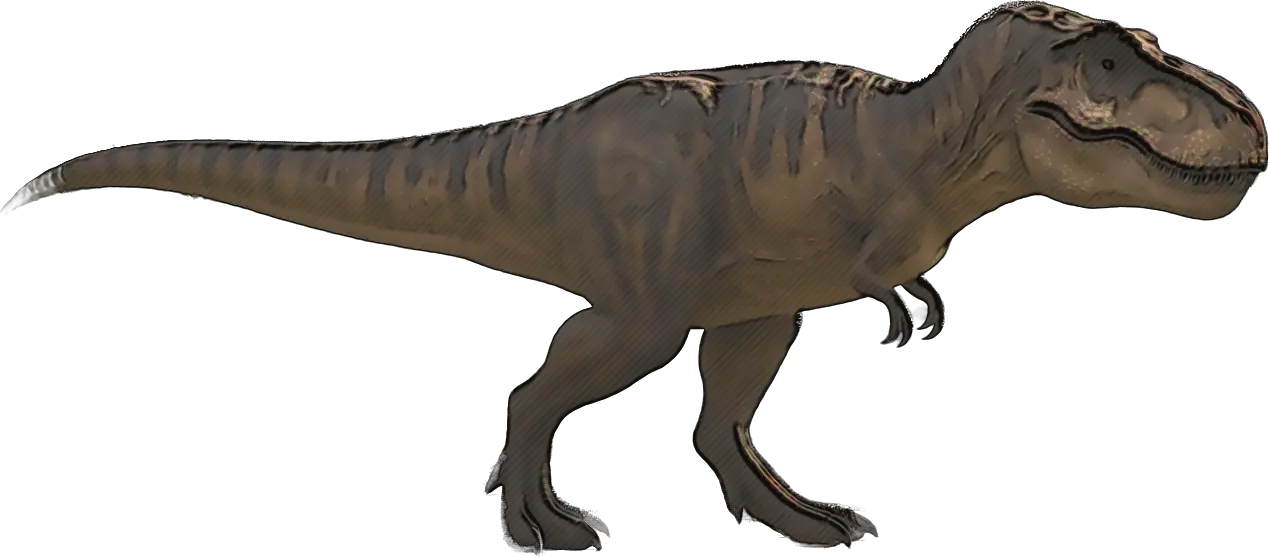 Tyrannosaurus rextie-RAN-uh-SORE-us REXA huge dinosaur with big teeth, tiny arms and a long, heavy tail.
- page 3
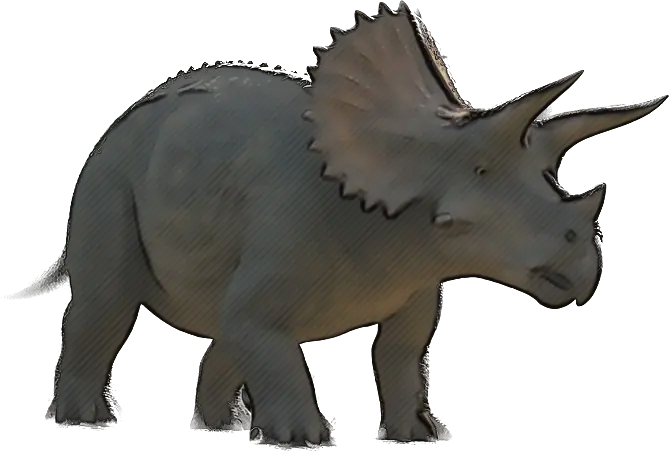 Triceratopstry-SERR-uh-topsA big, sturdy plant-eater with three horns and a bony frill.
Say the name
One sound chunk at a time. The loud chunk is in capitals. Say it slowly, then fast!
- TriceratopsTRYSERRUHTOPS
- Tyrannosaurus rexTIERANuhSOREusREX
- VelociraptorvuhLOSSuhRAPter
Print a page
Kip’s pages to color in and keep, and a blank one for your own discovery. One sheet each, US Letter, free to print at home or in class. Nothing to fill in online: each page is a file you print, and the site keeps nothing.
How a discovery works
- 1
Look close…
Kip spots a clue: a footprint, a strange shape, a huge word.
- 2
What do you think?
A real pause, long enough to answer out loud. There are no wrong answers.
- 3
Let’s find out!
The answer arrives, and it goes in the Field Book.
How we choose what to say
Every fact in a dinosaur guide is checked against a natural history museum or a peer-reviewed paper before it goes in, and the words children hear are checked separately from the notes for grown-ups. Where scientists disagree, we say so or leave the number out. Where something is an artistic choice, like a dinosaur’s color, we label it.
We teach one American pronunciation per name, checked against museum sources, so children hear the same word every time. The sound chunks are a teaching aid, not word parts.