Tyrannosaurus rex
A huge dinosaur with big teeth, tiny arms and a long, heavy tail.
TIE · RAN · uh · SORE · us · REX
Try saying it
TYRANNOSAURUS REX
- TIE
- RAN
- uh
- SORE
- us
- REX
Big chunks are the loud ones. Say it slowly, then all together.
Kip Fieldstone’s Field Book
Dinosaurs page 2
Tyrannosaurus rex
Say it: TIERANuhSOREusREX (say it out loud!)
Some of its teeth were as long as a banana!
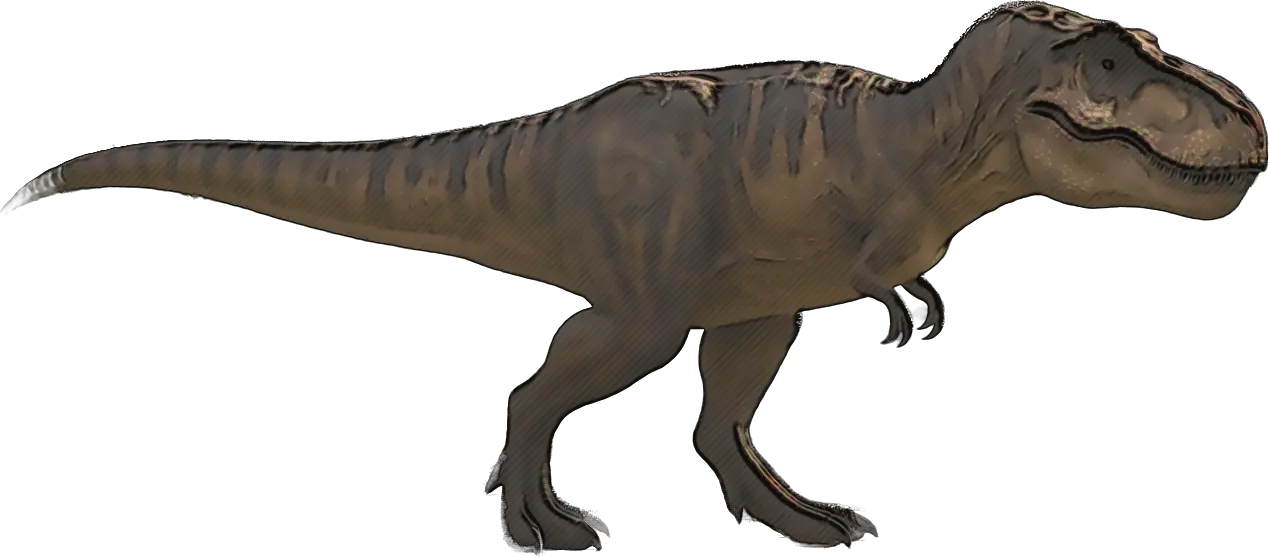
- big teeth, some as long as a banana
- tiny arms, two fingers on each hand
- long, heavy tail to balance
- two big legs
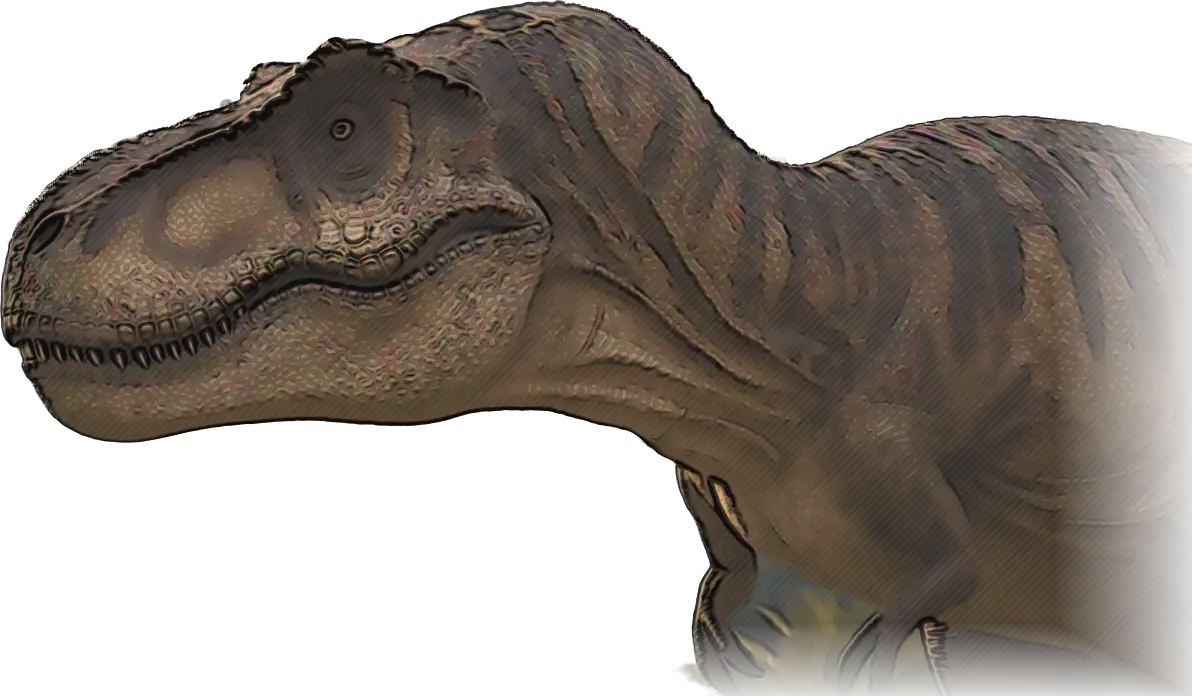
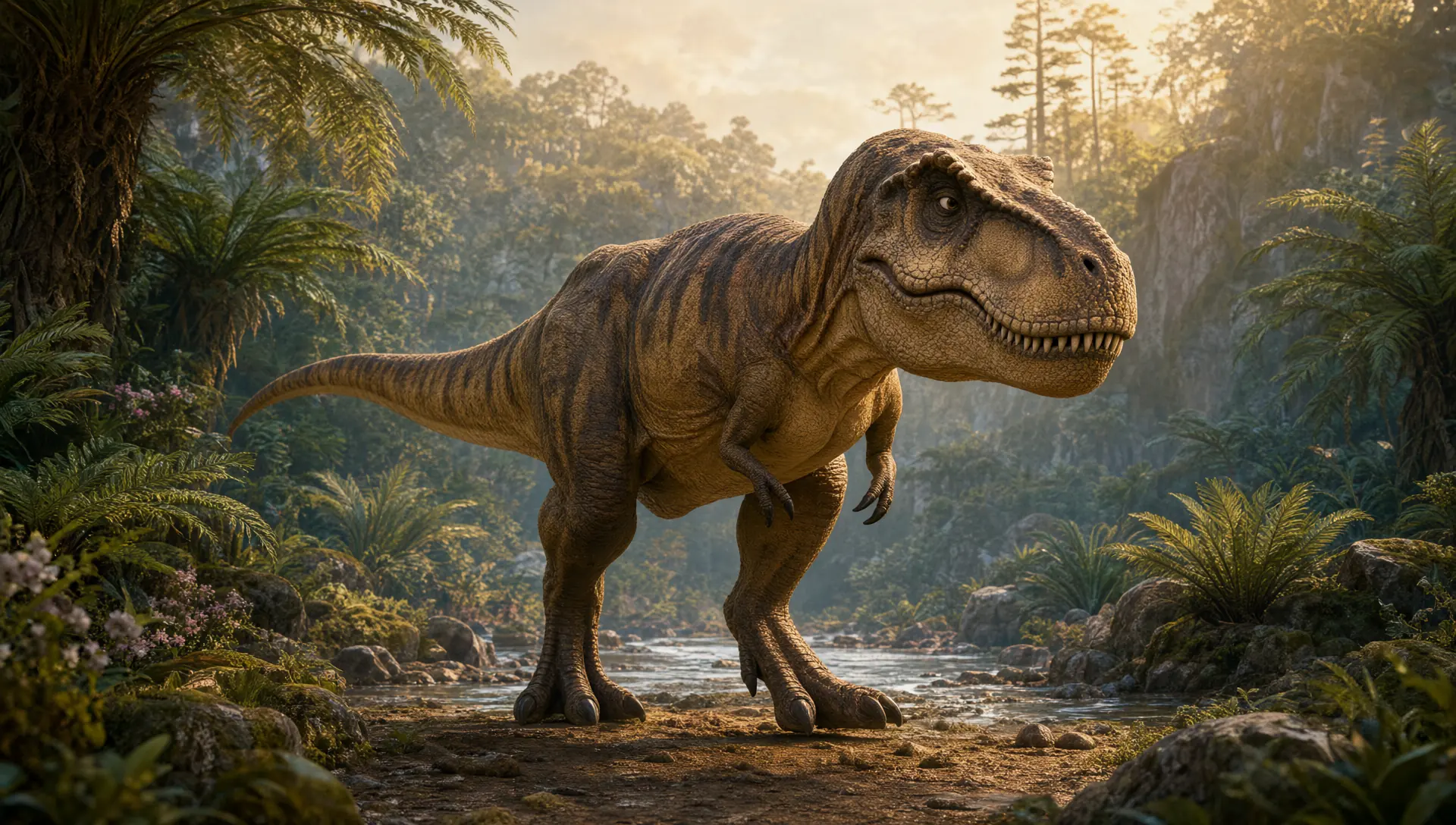
A deep, heavy head. Its mouth is closed here, but the teeth are big.
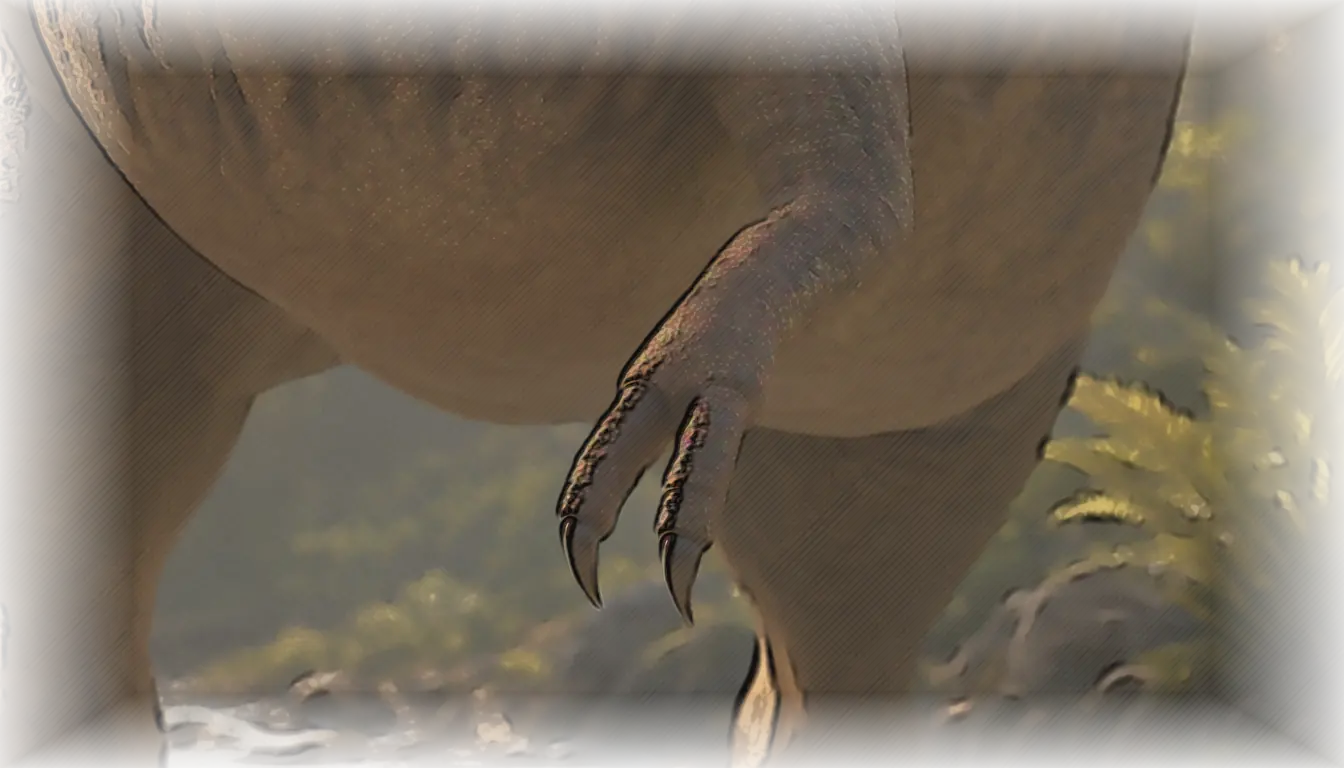
Tiny arms for such a big body, with two fingers on each hand.
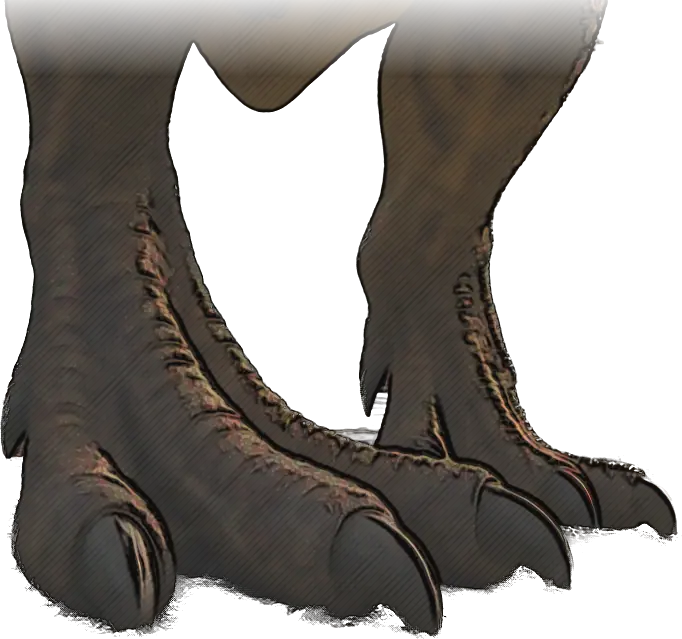
It walked on two big legs, with a long heavy tail to balance.
KipTyrannosaurus rex
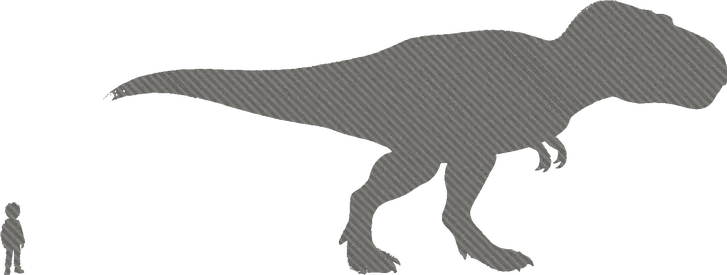
About 12 meters long. That is about as long as a bus.
Quick facts
- When
- Late Cretaceous, about 68 to 66 million years ago
- Where
- What is now the western USA and Canada
- How big
- Huge. About as long as a bus.
- Its name
- Its name means tyrant lizard king.
- Also
- Tiny arms, with two fingers on each hand.
- It had a super sniffer.
Look close
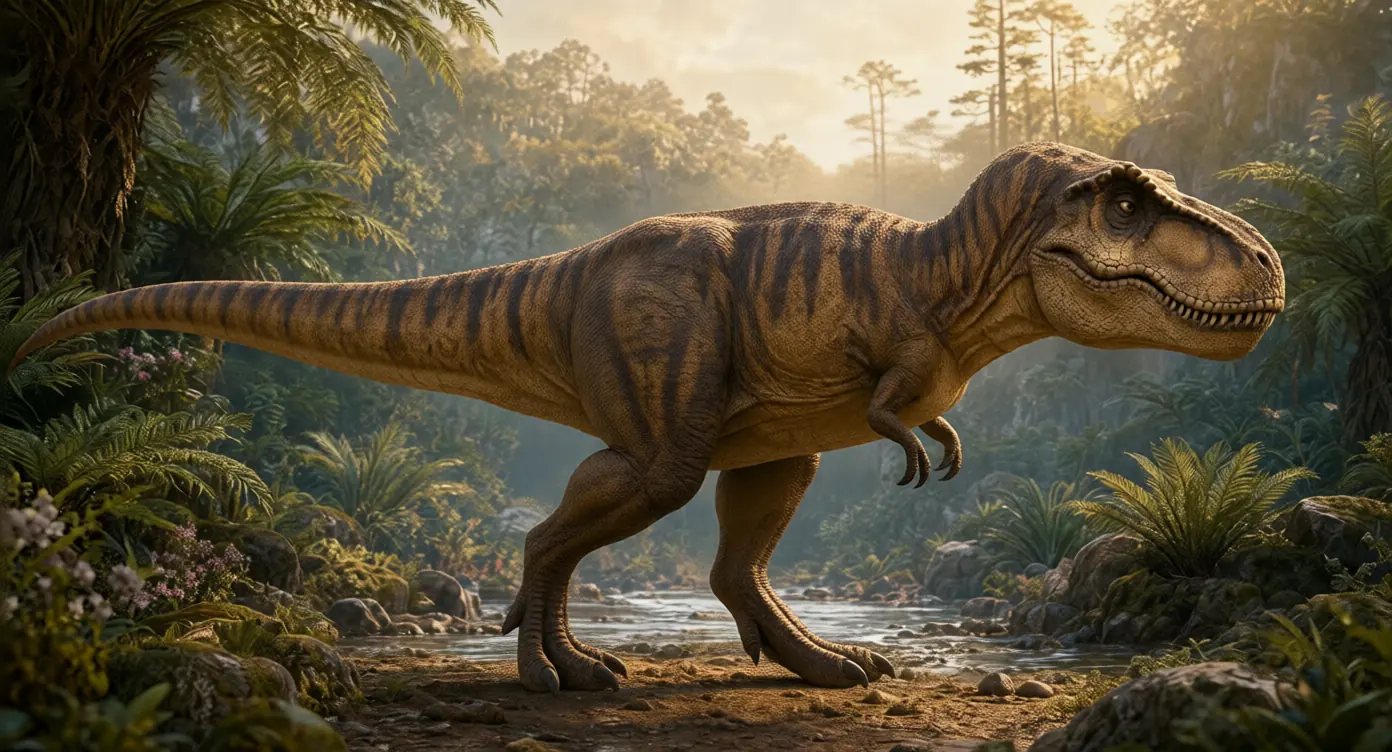
From the side you can see the long, heavy tail that balanced its big head. 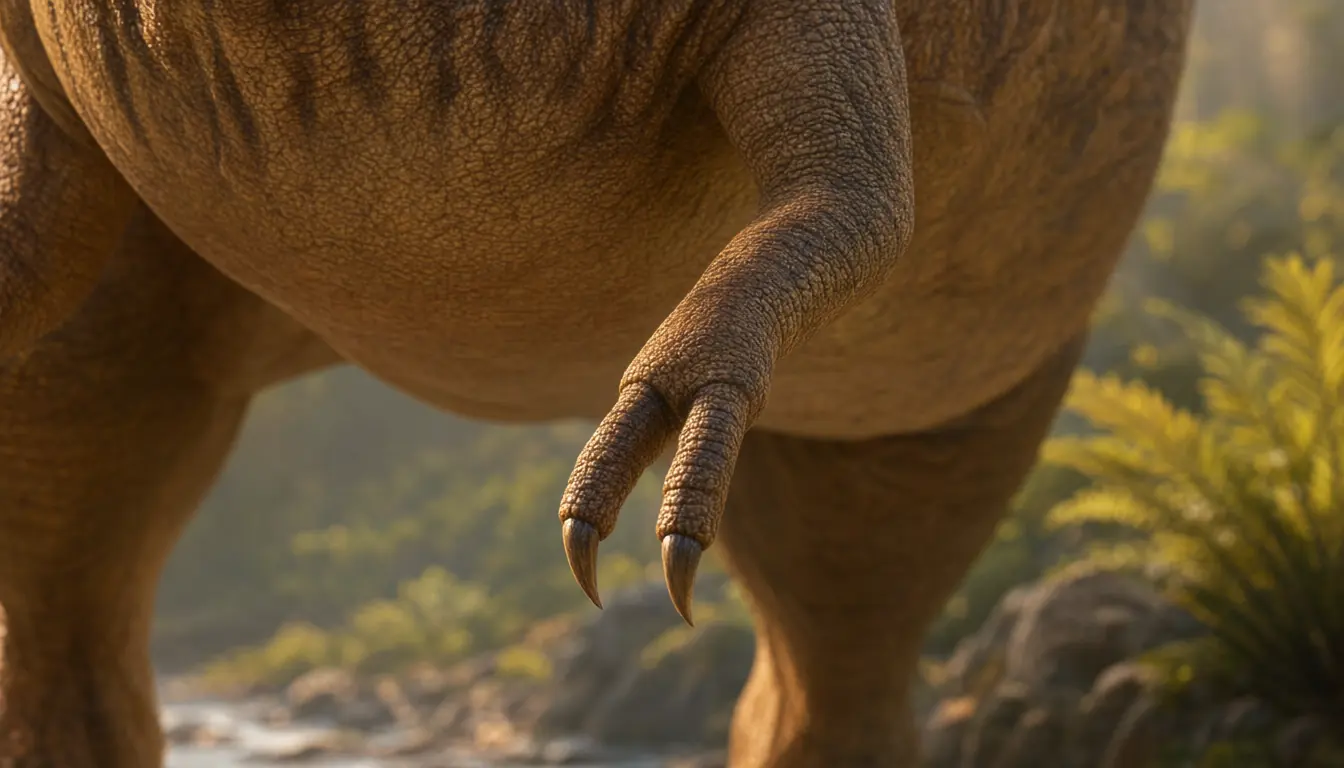
Tiny arms for such a big body, with two fingers on each hand. 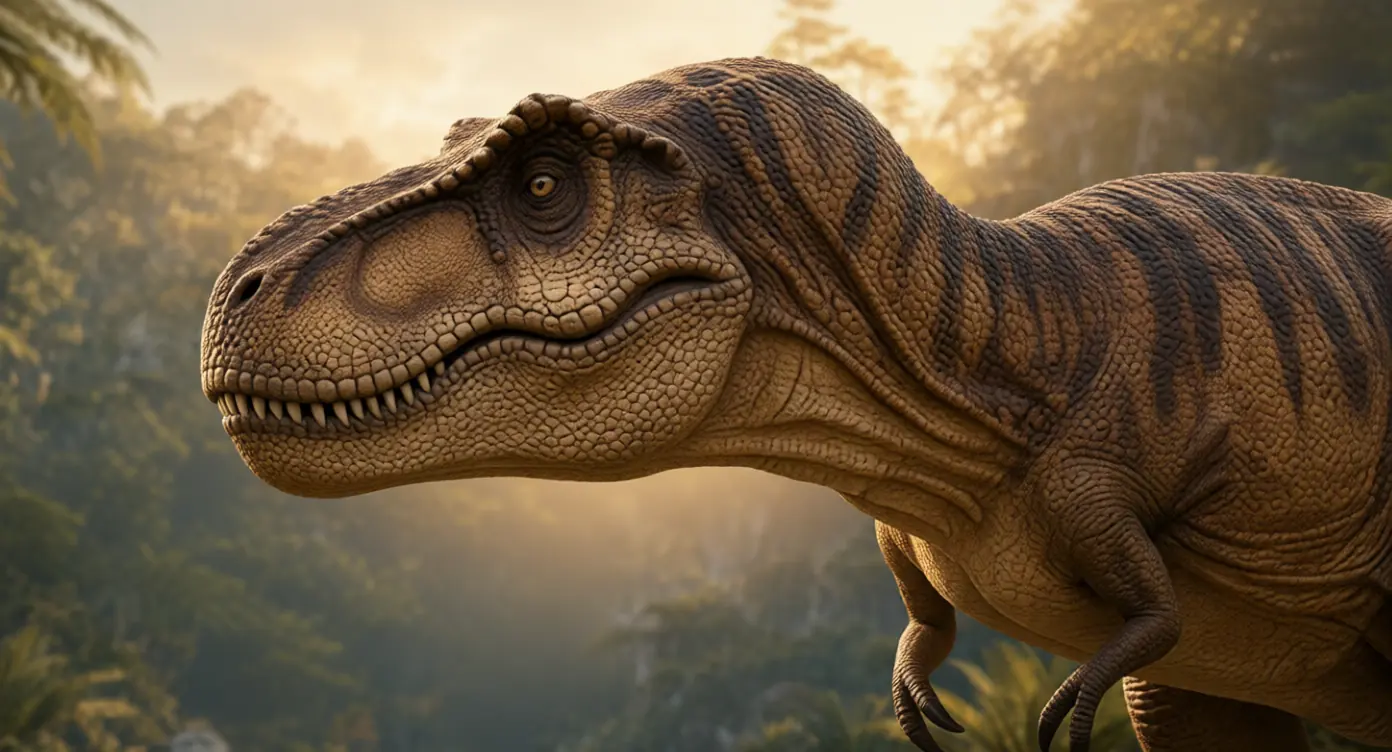
A deep, heavy head. Its mouth is closed here, but the teeth are big.
These are our drawings. Nobody knows what color a real Tyrannosaurus rex was.
For grown-ups
Everything above is cleared for a four-year-old. This is the detail behind it: what is known, what is inferred, what is our design, and what we leave out.
What children take away
Three ideas carry this guide: Tyrannosaurus rex was huge, it had tiny arms with two fingers, and it had big teeth. A child who can say the name, stretch their arms out to show how long it was, then tuck their elbows in to show the tiny arms, has the lesson.
Saying the name
The series says tie-RAN-uh-SORE-us REX, with the strongest stress on RAN and a smaller stress on SORE. The Natural History Museum in London and the Australian Museum print the same stresses and vowels, writing the third sound as “oh”; we write it “uh” because that is how it sounds at speed and it reads at a glance. The six sound chunks are a teaching aid, not word parts. “Tyrant lizard king” is the meaning of the whole name.
Where the facts come from
Every claim on this page is checked against a museum source and given a confidence level. We separate direct fossil evidence (two fingers, scaly skin), museum estimates that vary (length, weight), rough child-friendly analogy (a bus, a banana) and artistic design (the colors). We keep the hedges when we write for children.
What we deliberately leave out
Tyrannosaurus rex ate meat. That is true and cleared by our sources, but hunting, fighting and roaring are not part of the story we tell four-year-olds here. Our Tyrannosaurus rex is calm and powerful, with its mouth closed. Speed and weight numbers are out because the museums disagree with each other, and record-breaking claims of any kind are out on principle.
Talking about it together
- Ask “How big was it?” and wait. “As long as a bus” is the answer. Then ask how many fingers it had on each hand: two.
- Stretch both arms out wide, then pull your elbows in tight to your sides with two fingers out. That is the size of the arms against the body.
- Hold a long pencil out behind you and lean forward. That is the tail, balancing the heavy head.
The facts behind each line
Each line, with its evidence
- How big
Huge. About as long as a bus.
Museums estimate about 12 meters long and 3.5 to 4 meters tall at the hips; the largest known skeletons are nearly 13 meters. A city bus is a rough comparison for length only. Published weight estimates differ from museum to museum, so this guide gives no weight.
- The name
Its name means tyrant lizard king.
Tyrannosaurus is Greek for “tyrant lizard” and rex is Latin for “king”. The whole name carries the meaning. The six sound chunks do not mean anything on their own.
- When and where
It lived a very, very long time ago, in the place we now call North America.
Late Cretaceous, about 68 to 66 million years ago. What is now the western USA and Canada.
Tiny arms, with two fingers on each hand.
Its arms were about a meter long, tiny against its body, and each hand had exactly two clawed fingers. This is direct fossil evidence; a skeleton found in 1988 with its arms intact settled an old argument about a third finger. Nobody knows for certain what the arms were used for.
Lots of big teeth, some as long as a banana.
About sixty teeth, saw-edged, with the longest crowns around 20 centimeters. The banana is a rough length comparison for children.
It walked on two big legs, with a long heavy tail to balance.
Tyrannosaurus rex moved on its two hind legs; the long, heavy tail counterbalanced its enormous head. Each foot had three forward-facing toes, which our artwork follows but the guide does not turn into a counting lesson.
It had a super sniffer.
A large part of its brain processed smells, so it could find food over long distances.
It ate meat.
Tyrannosaurus rex was a meat-eater. Its tooth marks are known on Triceratops and Edmontosaurus bones, and pieces of bone turn up in its fossil dung. Cleared by our sources, but kept out of the children's lines and pictures: no hunting scenes for this age.
Scaly skin, as far as anyone can tell.
Preserved skin from Tyrannosaurus and its close relatives shows scales, and there is no direct evidence of feathers on T. rex. Our artwork shows pebbled skin.
What this guide does not claim
- What it weighed. The museum estimates disagree with each other by a wide margin, so we leave weight out rather than pick one.
- How fast it ran. The museum estimates disagree, and we do not give speeds.
- That it roared. No evidence supports a movie roar, and our Tyrannosaurus rex never snarls.
- That it hunted in packs. The Natural History Museum says this is not known.
- Fights with Triceratops. The tooth marks are real, but fighting is not a story for a four-year-old.
- Feathers or no feathers everywhere. There is no direct evidence of feathers on T. rex and preserved skin shows scales; we draw scales and leave it there.
- Its colors. Nobody knows them; see the note on our artwork below.
Our pictures
Our Tyrannosaurus rex’s warm brown pebbled skin, darker banding along the back and lighter underside are an artistic design, not a reconstruction of real colors. No fossil tells us what color Tyrannosaurus rex was.
Sources
- Tyrannosaurus (Dino Directory), Natural History Museum, London.
- How did Tyrannosaurus rex use its arms?, Natural History Museum, London.
- Debunking dinosaur myths and movie misconceptions, Natural History Museum, London.
- Tyrannosaurus rex (dinosaur fact sheet), Australian Museum.
- Tyrannosaurus rex (the holotype specimen), Carnegie Museum of Natural History.
- Tyrannosaurus, Wikipedia.
More to discover