

Velociraptor
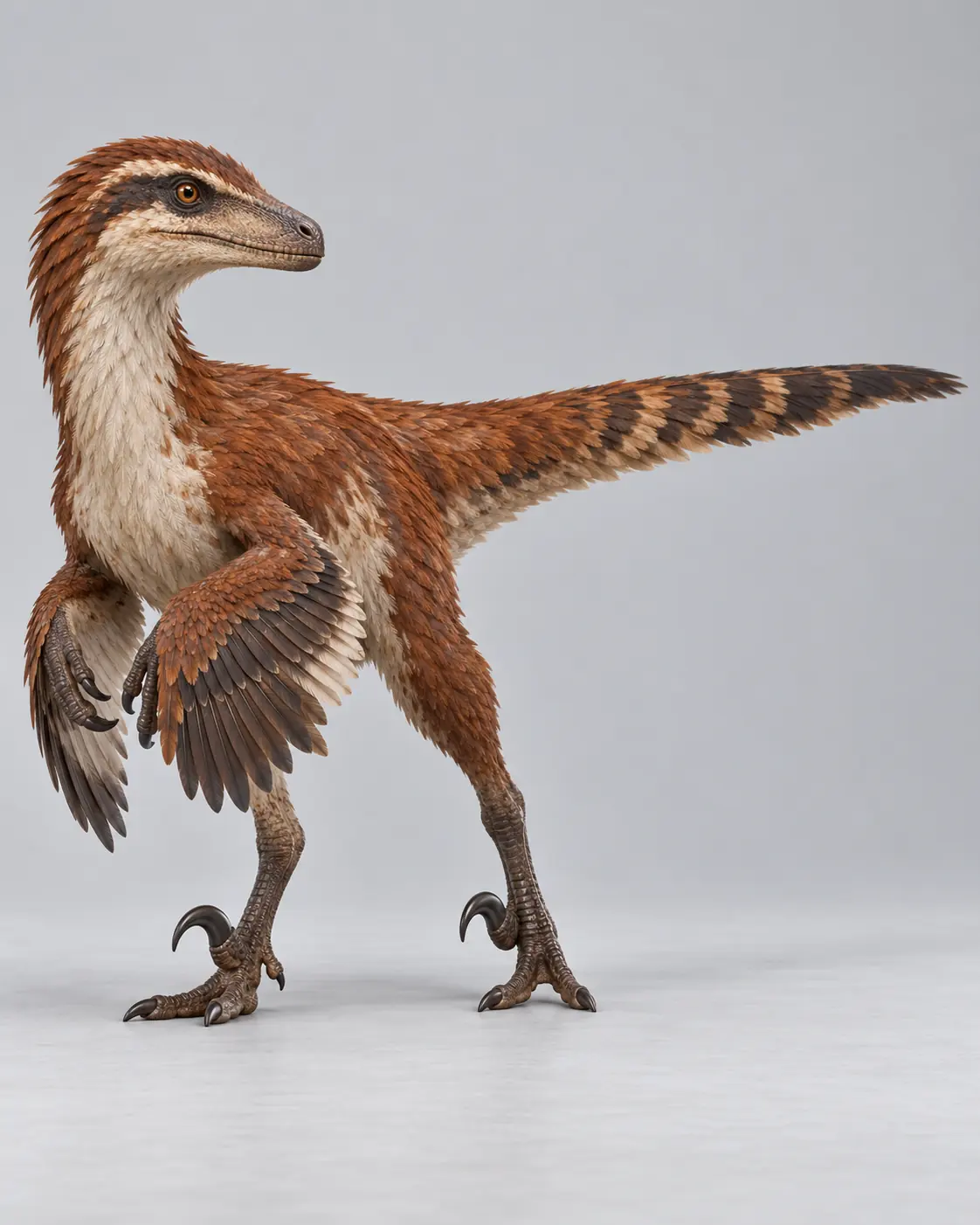
A small, feathery dinosaur with speedy feet and a very long tail.
vuh · LOSS · uh · RAP · ter
Try saying it
VELOCIRAPTOR
- vuh
- LOSS
- uh
- RAP
- ter
Big chunks are the loud ones. Say it slowly, then all together.
Kip Fieldstone’s Field Book
Dinosaurs page 1
Velociraptor
Say it: vuhLOSSuhRAPter (say it out loud!)
Feathers, like a bird!
- narrow head, calm eye
- feathers, like a bird!
- long, stiff tail held out behind
- two legs, up on its toes
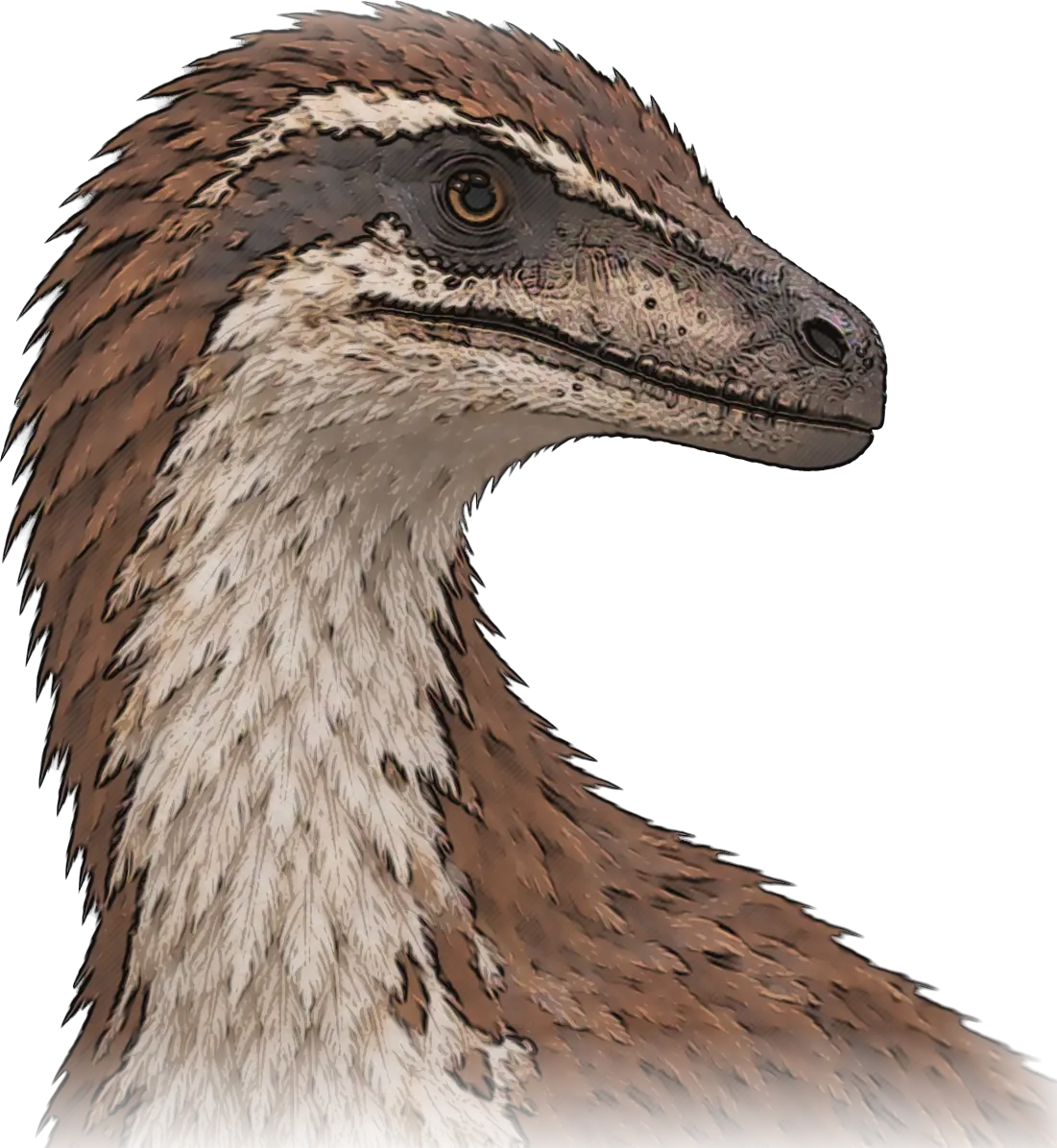
A narrow head, a calm eye and a closed mouth.
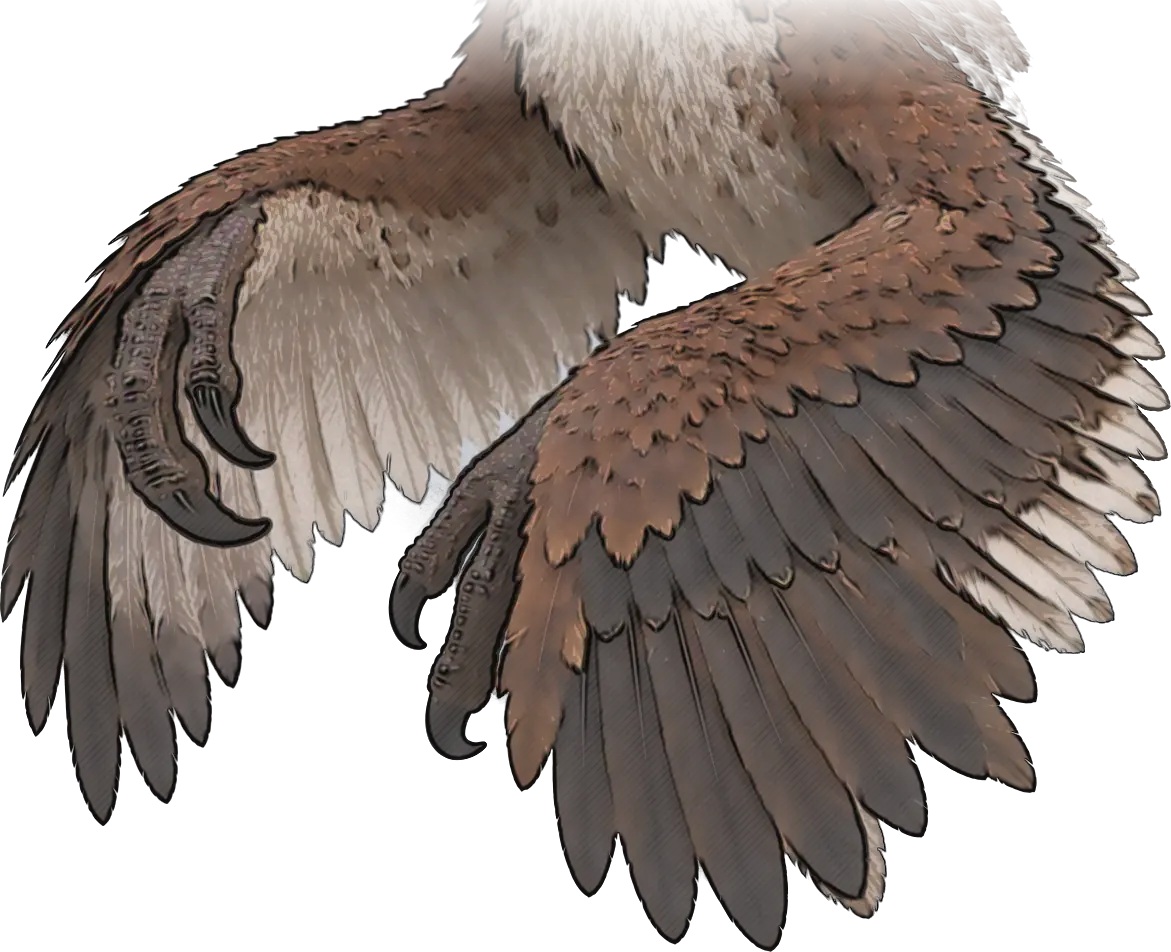
Long feathers grew along its arms, a bit like a wing.
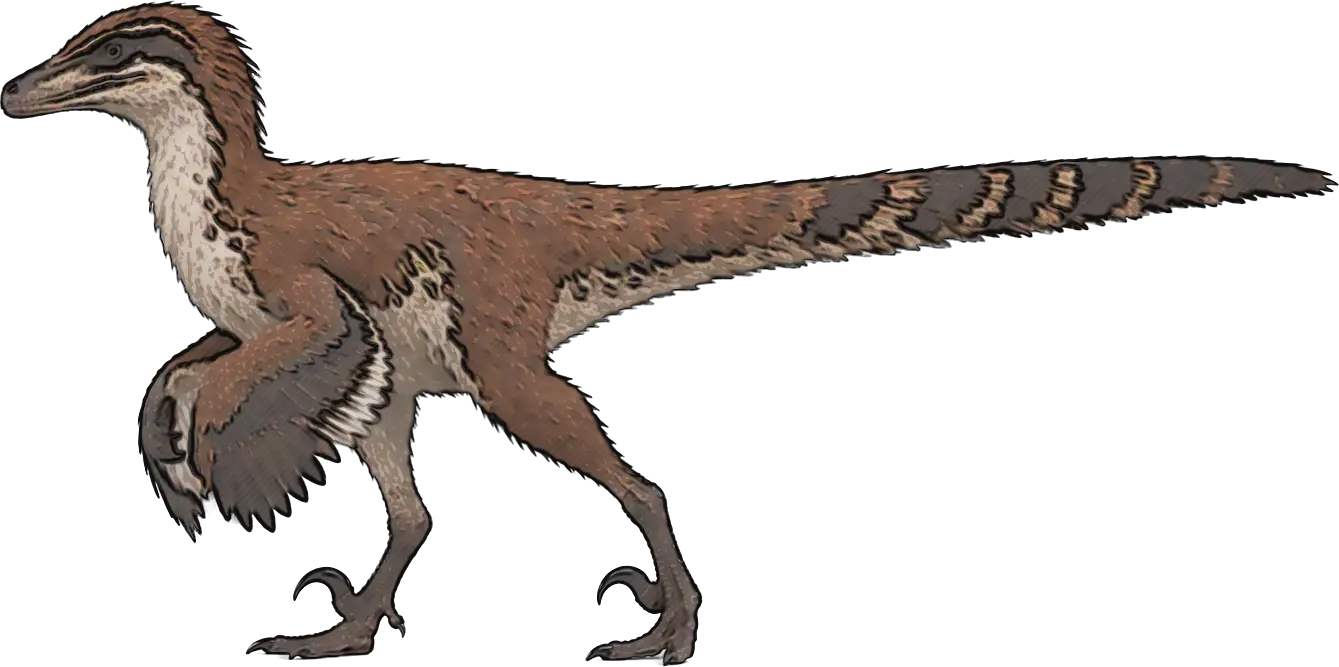
From the side you can see how much of a Velociraptor is tail.
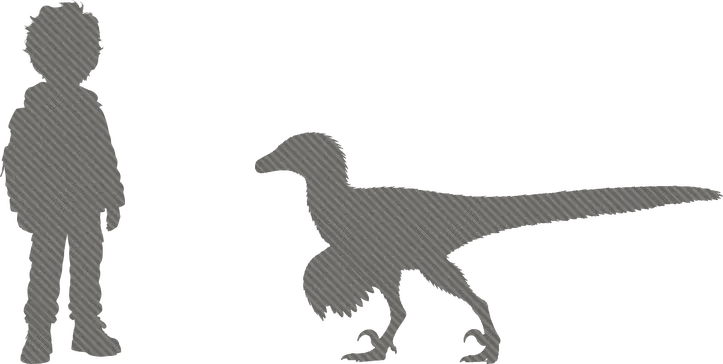
KipVelociraptor
About 1.8 meters long, and most of that is tail.
Quick facts
- When
- Late Cretaceous, about 74 to 70 million years ago
- Where
- What is now Mongolia; the AMNH also lists China
- How big
- About the size of a turkey, with a long, long tail.
- Its name
- Its name means quick robber.
- Also
- Speedy feet.
Look close
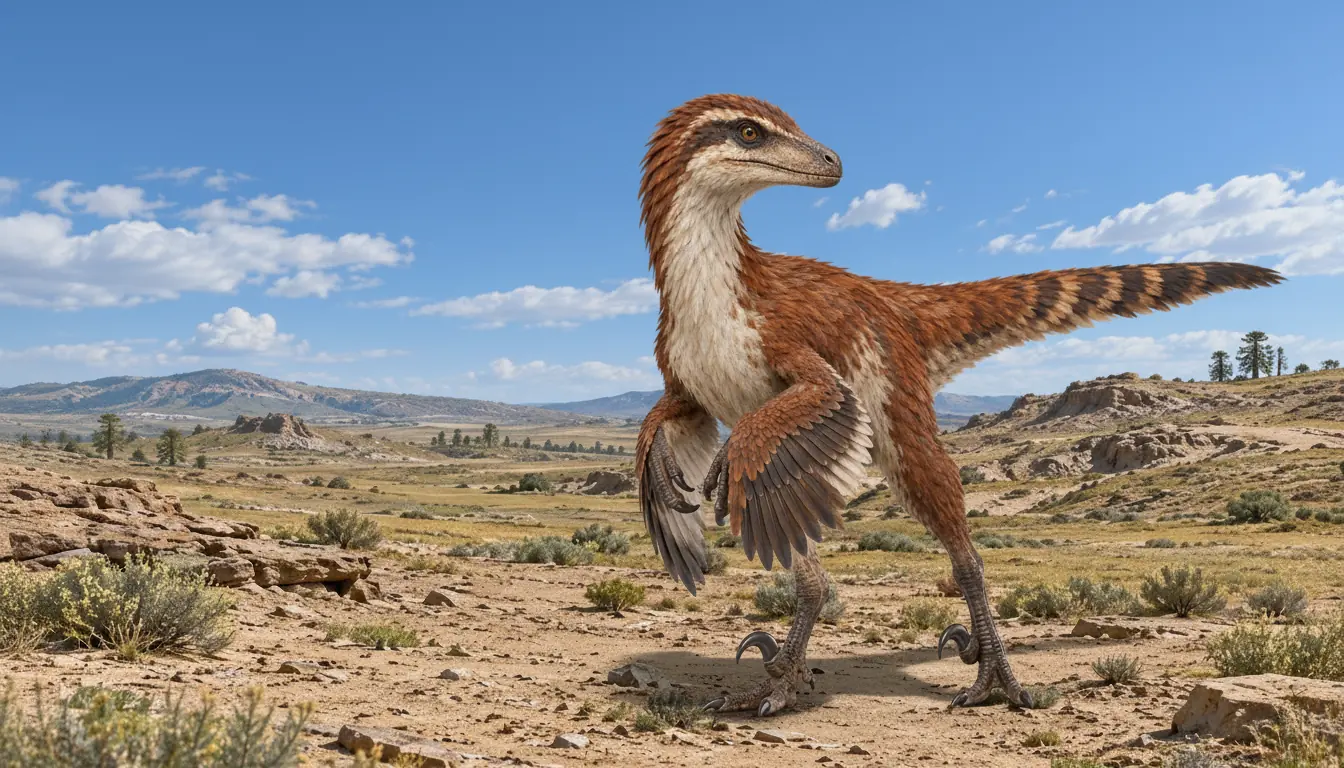
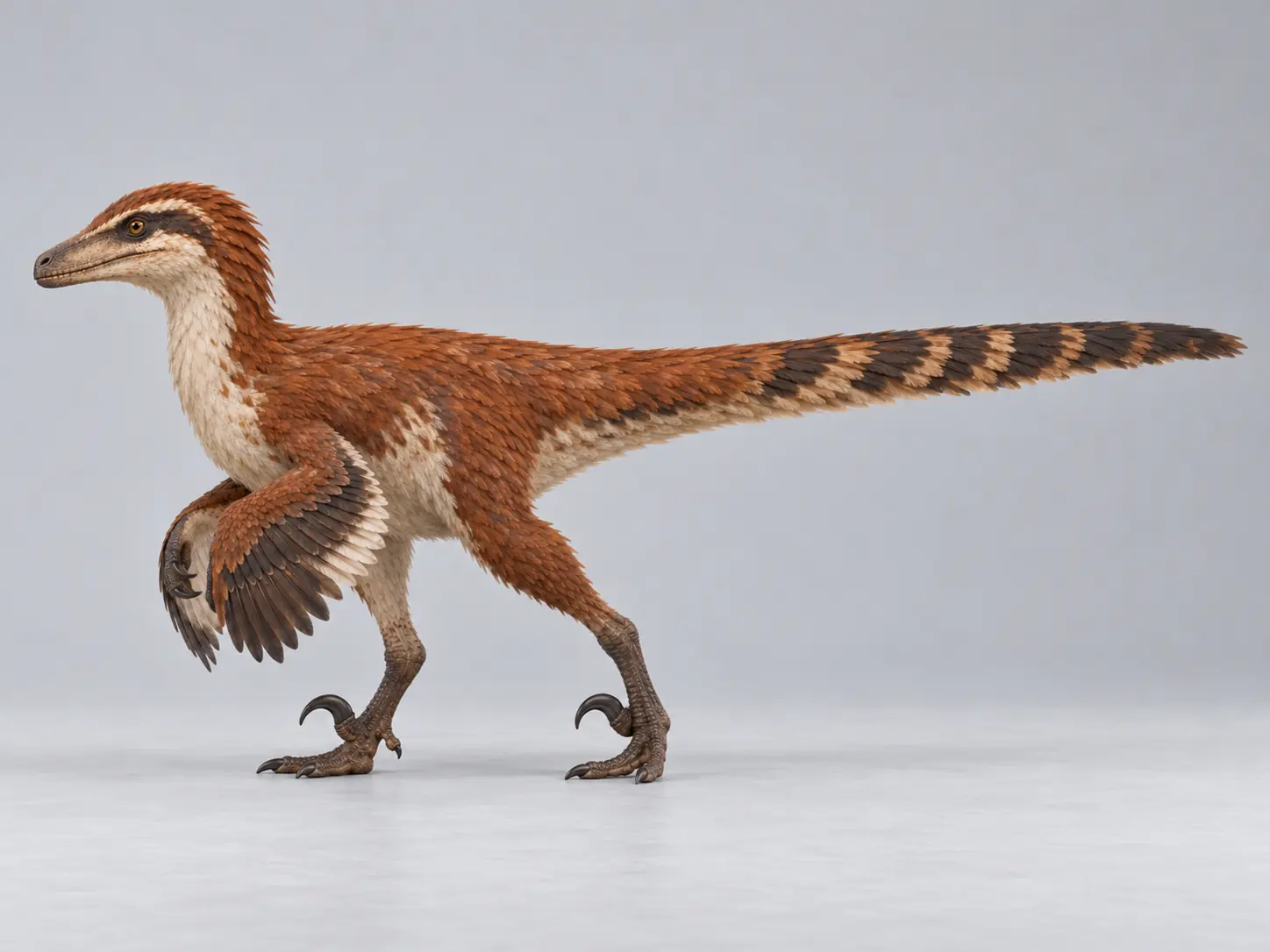
From the side you can see how much of a Velociraptor is tail. 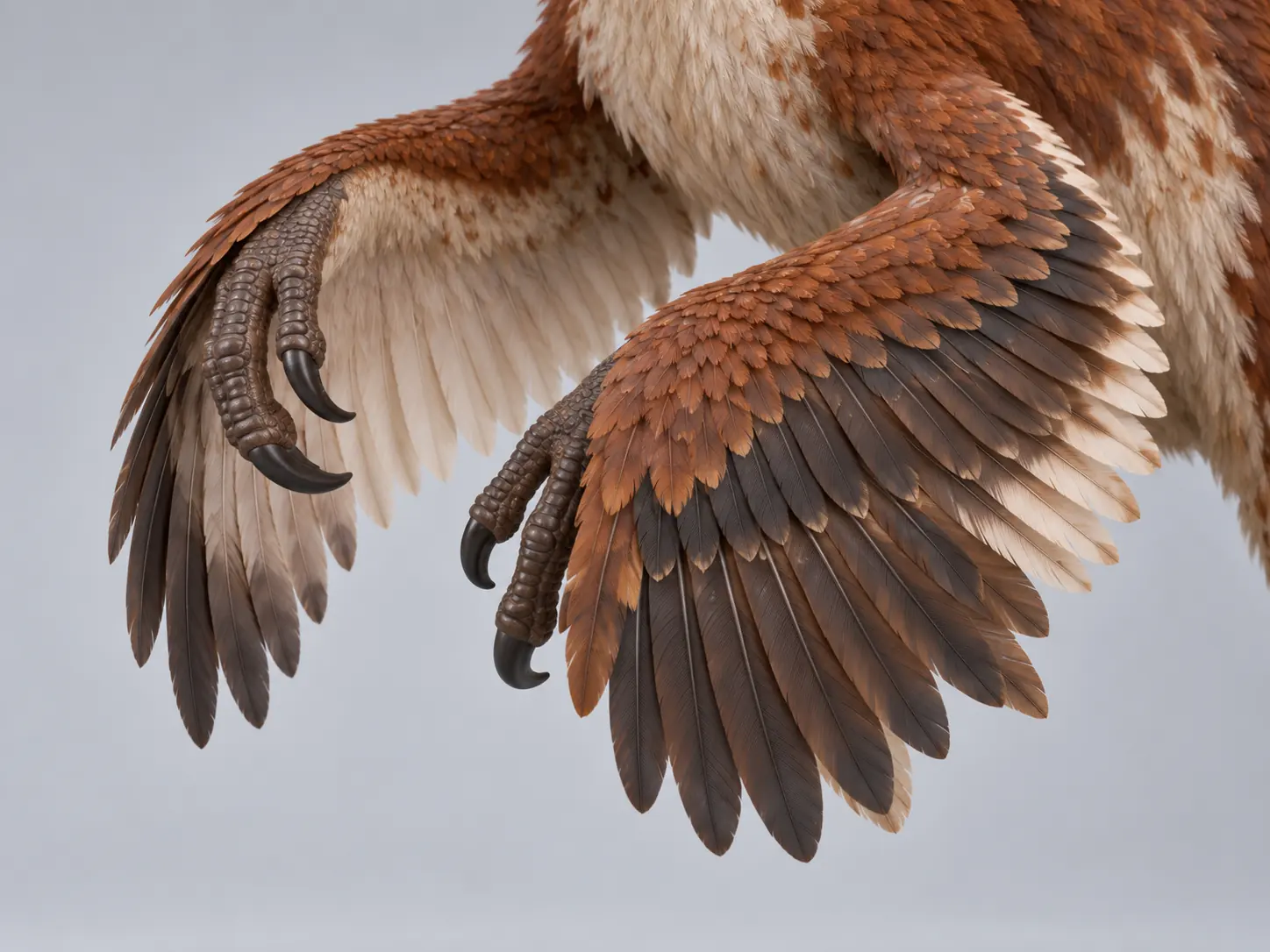
Long feathers grew along its arms, a bit like a wing. 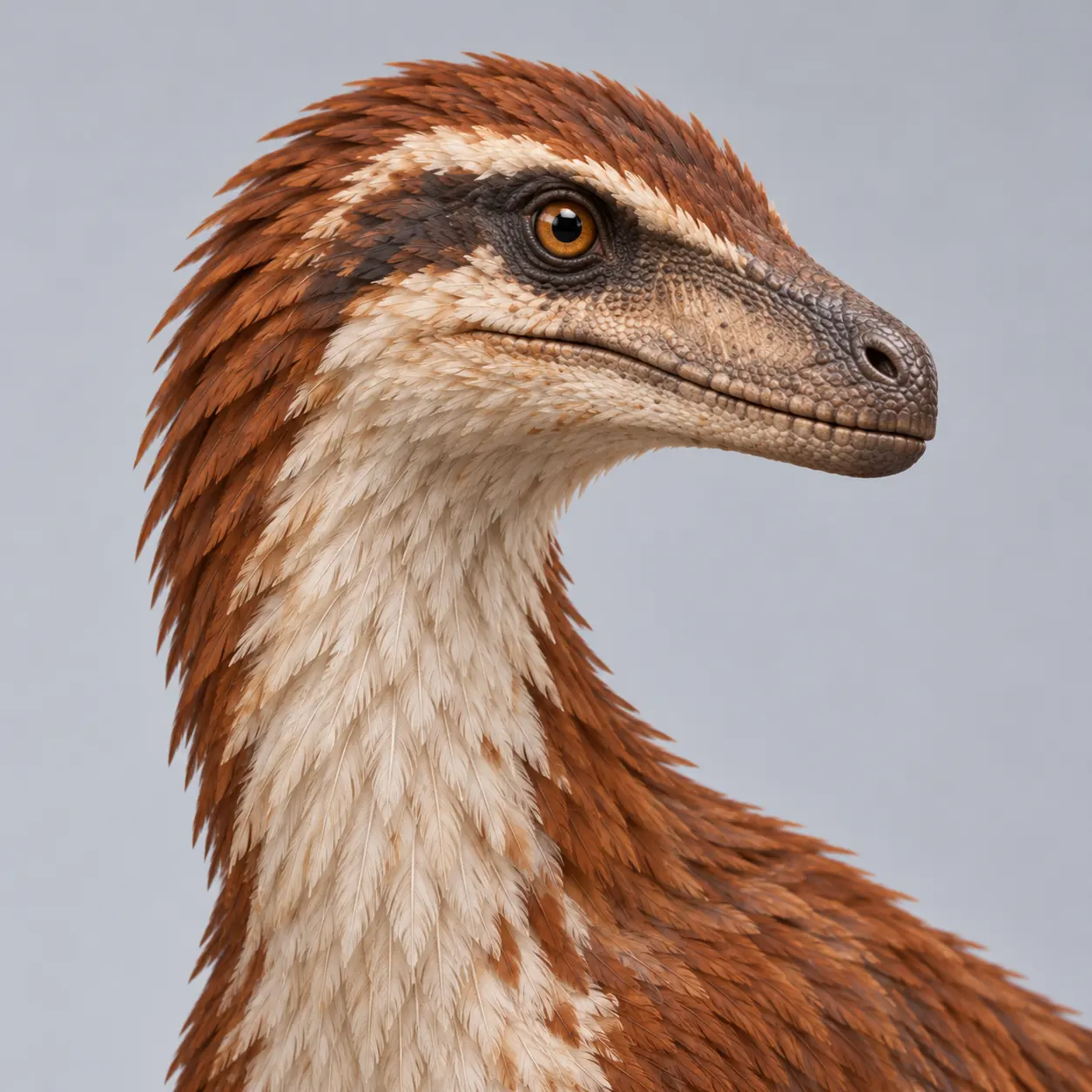
A narrow head, a calm eye and a closed mouth.
These are our drawings. Nobody knows what color a real Velociraptor was.
For grown-ups
Everything above is cleared for a four-year-old. This is the detail behind it: what is known, what is inferred, what is our design, and what we leave out.
What children take away
Three ideas carry this guide: Velociraptor was small, it had feathers, and it was built for quick, light movement. A child who can say the name, picture a turkey with a long tail, and say “feathers, like a bird” has the lesson.
Saying the name
The series uses the American pronunciation printed by the American Museum of Natural History, vuh-LOSS-uh-RAP-ter, with the strongest stress on LOSS and a smaller stress on RAP. The Natural History Museum in London prints vel-OSS-ee-rap-tor. Both are legitimate. We teach one so children hear the same word every time.
The five sound chunks are a teaching aid, not word parts. “Quick robber” is the meaning of the whole name.
Where the facts come from
Every claim on this page is checked against a museum or peer-reviewed source and given a confidence level. We separate direct fossil evidence (the feather quill knobs), strong inference (the full feathery coat), rough child-friendly analogy (turkey-sized) and artistic design (the colors). We keep the hedges when we write for children.
What we deliberately leave out
Velociraptor was a meat-eater and could not fly. Both are true and both are cleared by our sources, but neither is part of the story we tell four-year-olds here. Predation, pack hunting and “fastest dinosaur” claims are out: the first two are either unsupported or not for this age, and no reliable top speed exists.
Talking about it together
- Ask “How big was it?” and wait. “Like a turkey” is the answer, with a long tail added.
- Spread your arms and ask where the feathers were. Along the arms, like a wing, is the strongest evidence.
- Hold a long pencil out behind you and walk. That is the stiff tail, helping balance.
The facts behind each line
Each line, with its evidence
- How big
About the size of a turkey, with a long, long tail.
Museums give an overall length of about 1.8 meters, and most of that is tail. Published weight estimates differ from museum to museum, so this guide gives no weight.
- The name
Its name means quick robber.
The whole name carries the meaning. The AMNH glosses it as “speedy thief”; the series says “quick robber”. The syllables do not mean “quick” and “robber” on their own.
- When and where
It lived a very, very long time ago, in the place we now call Mongolia.
Late Cretaceous, about 74 to 70 million years ago. What is now Mongolia; the AMNH also lists China.
Feathers, like a bird.
Velociraptor had feathers. Bumps on a fossil arm bone, called quill knobs, show where long feathers were anchored. The full feathery coat is a careful reconstruction from its close feathered relatives.
It ran on two legs, up on its toes.
Velociraptor moved on its two hind legs. Each foot carried its weight on two toes while the big curved claw on the second toe was held up off the ground.
A long, stiff tail held out behind.
Its long tail was stiffened by bony rods and helped it balance. Stiff does not mean rigid; it could still bend a little.
Speedy feet.
Its leg build suggests quick, agile movement. Nobody knows its top speed, so the guide never gives a number.
Small, feathery and more like a bird than a monster.
The real animal was small, feathered and bird-like, nothing like the human-sized scaly raptors in films. It could not fly.
What this guide does not claim
- How fast it ran. There is no reliable number, and it was not “the fastest”.
- What it weighed. The museum estimates disagree with each other, so we leave weight out rather than pick one.
- That it hunted in packs. The evidence does not show that.
- Its colors. Nobody knows them; see the note on our artwork below.
- Hunting, prey or fighting. Velociraptor ate meat, but this guide keeps the story about feathers, size and speed.
- A toe count. Two toes touched the ground and one big claw stayed raised, which is interesting but not a counting lesson for a four-year-old.
Our pictures
Our Velociraptor’s russet-brown feathers, cream chest and banded tail are an artistic design, not a reconstruction of real colors. No fossil tells us what color Velociraptor was.
Sources
- Velociraptor mongoliensis (OLogy card), American Museum of Natural History.
- Velociraptor Had Feathers, American Museum of Natural History.
- Feather quill knobs in the dinosaur Velociraptor (Turner, Makovicky and Norell, Science 317:1721), Science.
- Vicious Velociraptor: tales of a turkey-sized dinosaur, Natural History Museum, London.
- Velociraptor (Dino Directory), Natural History Museum, London.
More to discover
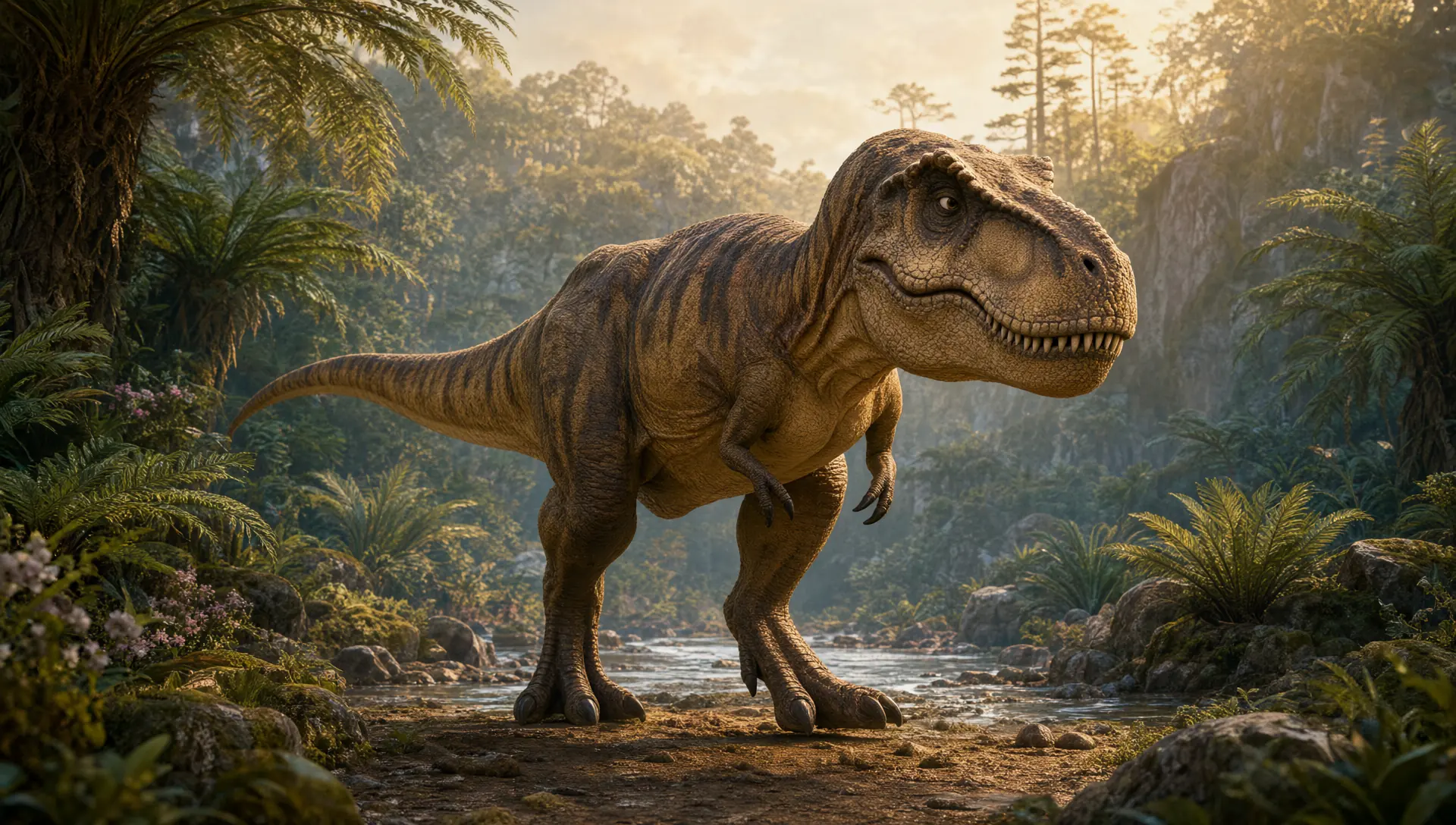
Tyrannosaurus rex
tie-RAN-uh-SORE-us REX
A huge dinosaur with big teeth, tiny arms and a long, heavy tail.