Triceratops
A big, sturdy plant-eater with three horns and a bony frill.
TRY · SERR · UH · TOPS
Try saying it
TRICERATOPS
- TRY
- SERR
- UH
- TOPS
Big chunks are the loud ones. Say it slowly, then all together.
Kip Fieldstone’s Field Book
Dinosaurs page 3
Triceratops
Say it: TRYSERRUHTOPS (say it out loud!)
It ate plants!
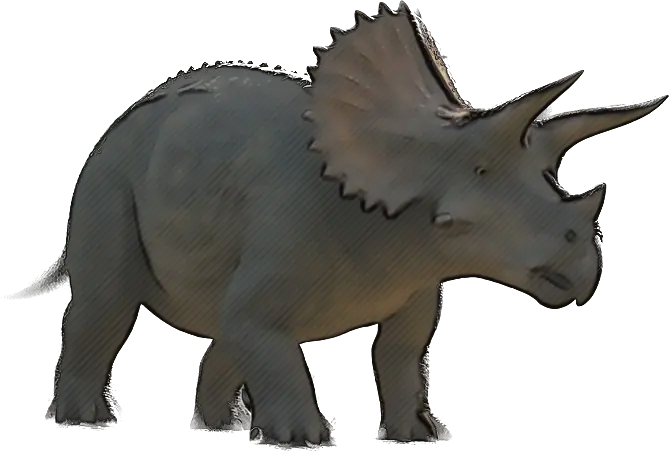
- two long horns over its eyes, a short one on its nose
- a big bony frill, like a shield
- a beak like a parrot’s
- four thick legs
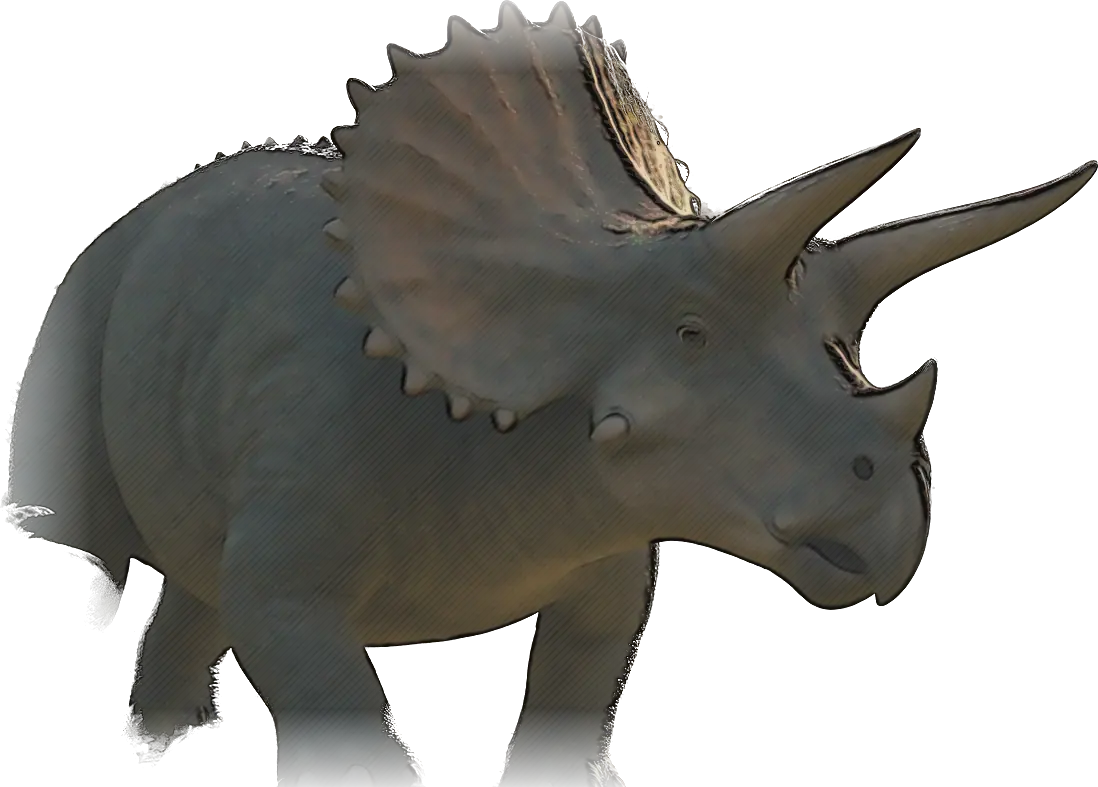
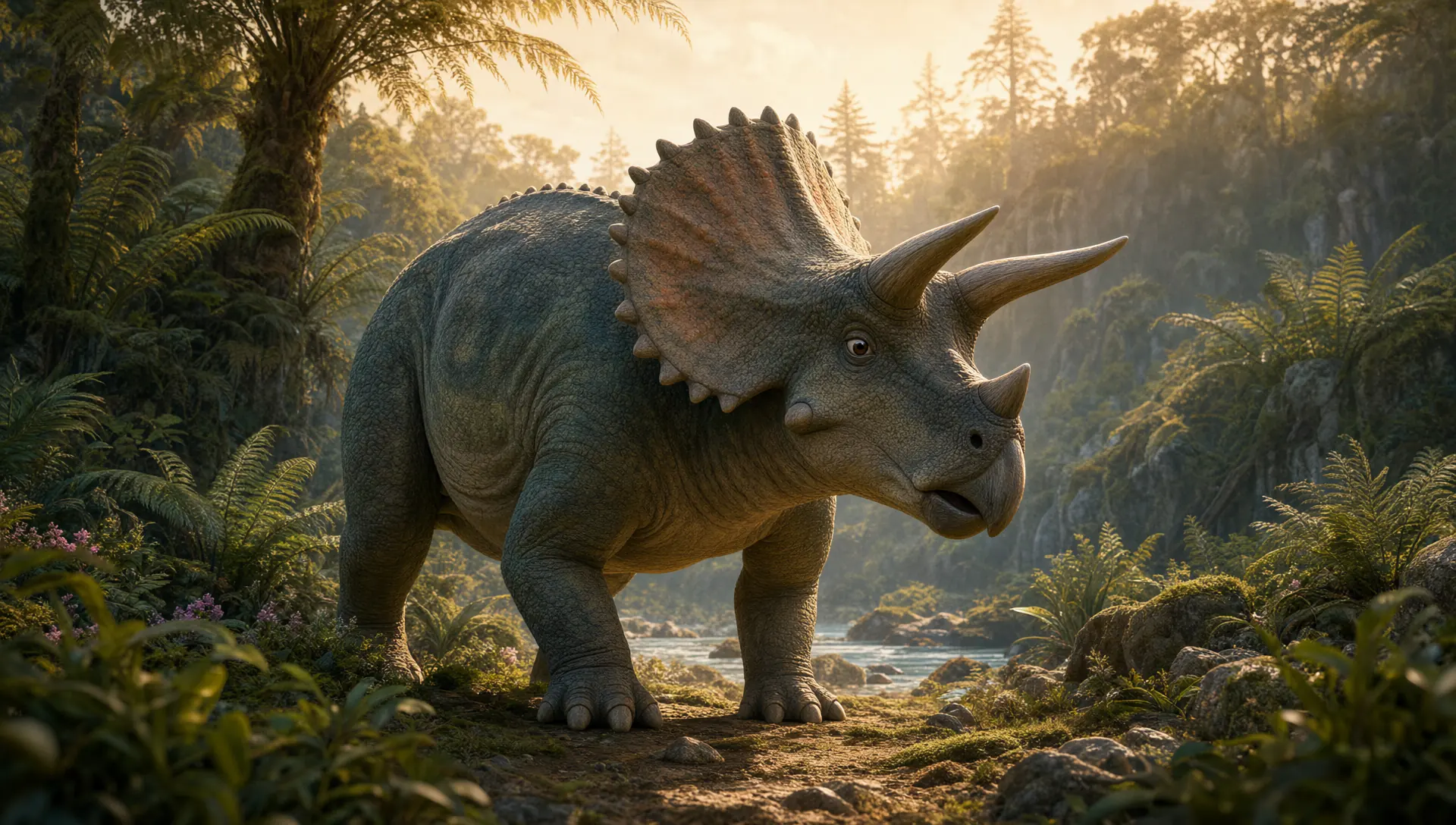
Two long horns over the eyes, a short one on the nose, and a beak like a parrot’s.
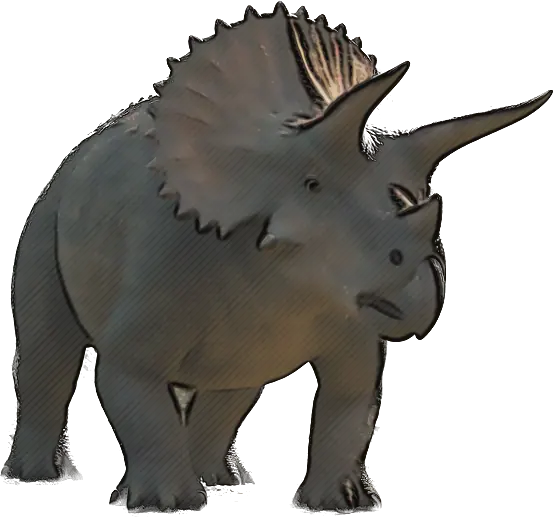
A big bony frill behind its head, like a shield.
It walked on four thick legs.
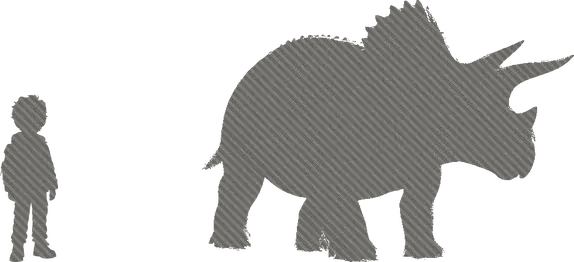
KipTriceratops
About 9 meters long. Bigger than an elephant!
Quick facts
- When
- Late Cretaceous, about 68 to 66 million years ago
- Where
- What is now the western USA
- How big
- Bigger than an elephant, with a head as big as a door.
- Its name
- Its name means three-horned face.
- Also
- Three horns: two long ones over its eyes, and a short one on its nose.
Look close
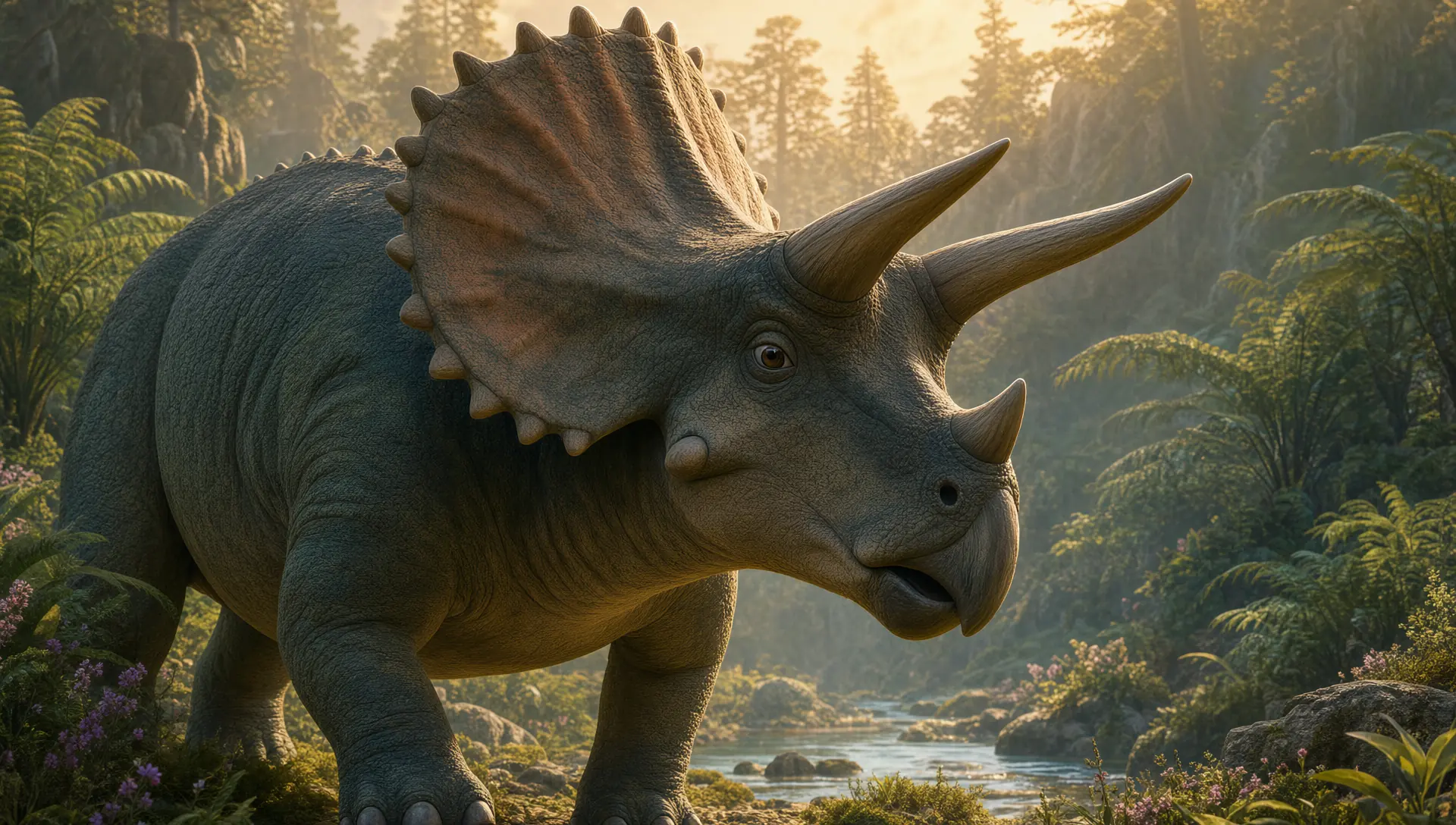
Two long horns over the eyes, a short one on the nose, and a beak like a parrot’s. 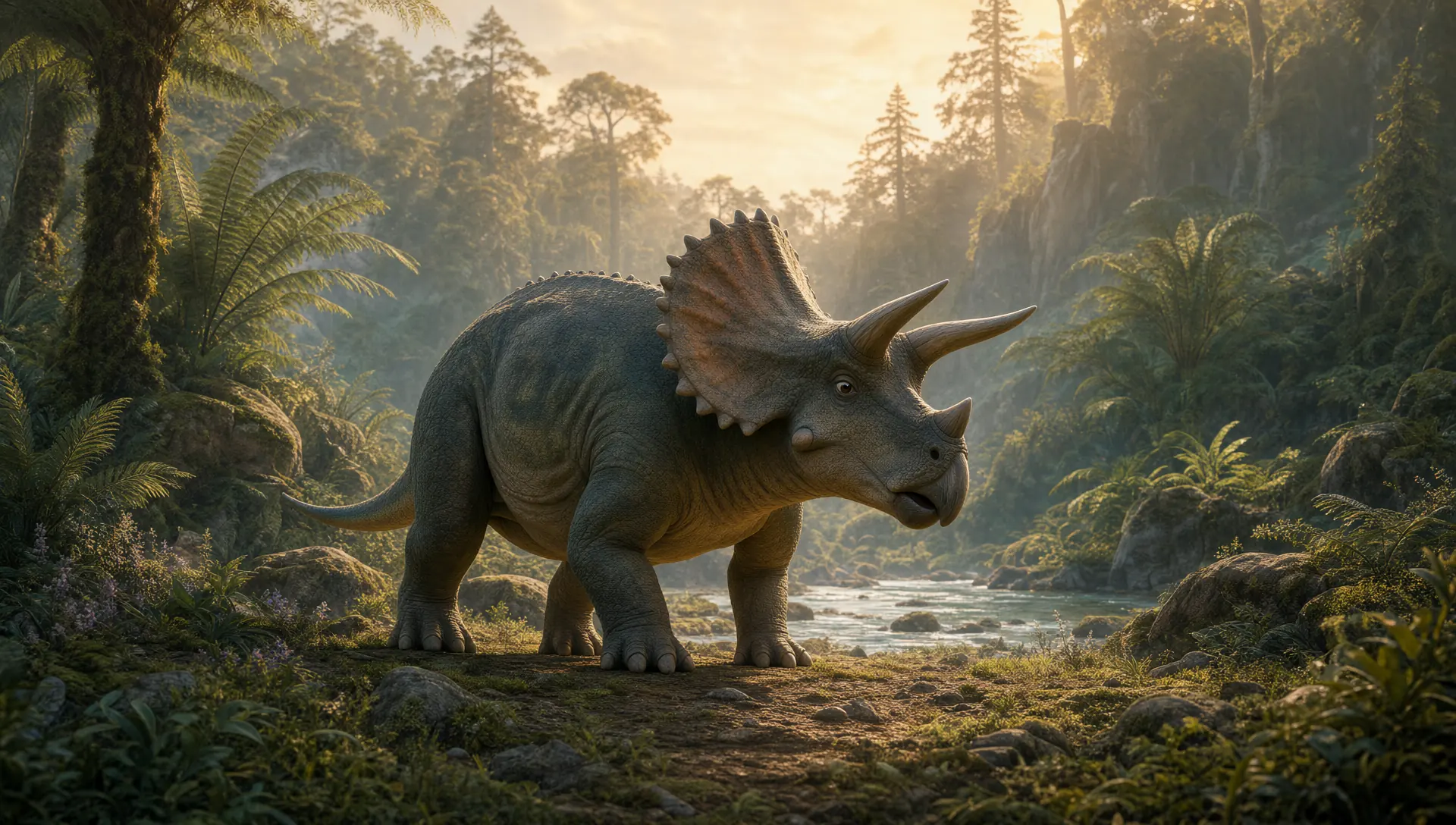
From the side you can see the frill behind its head and its four thick legs. 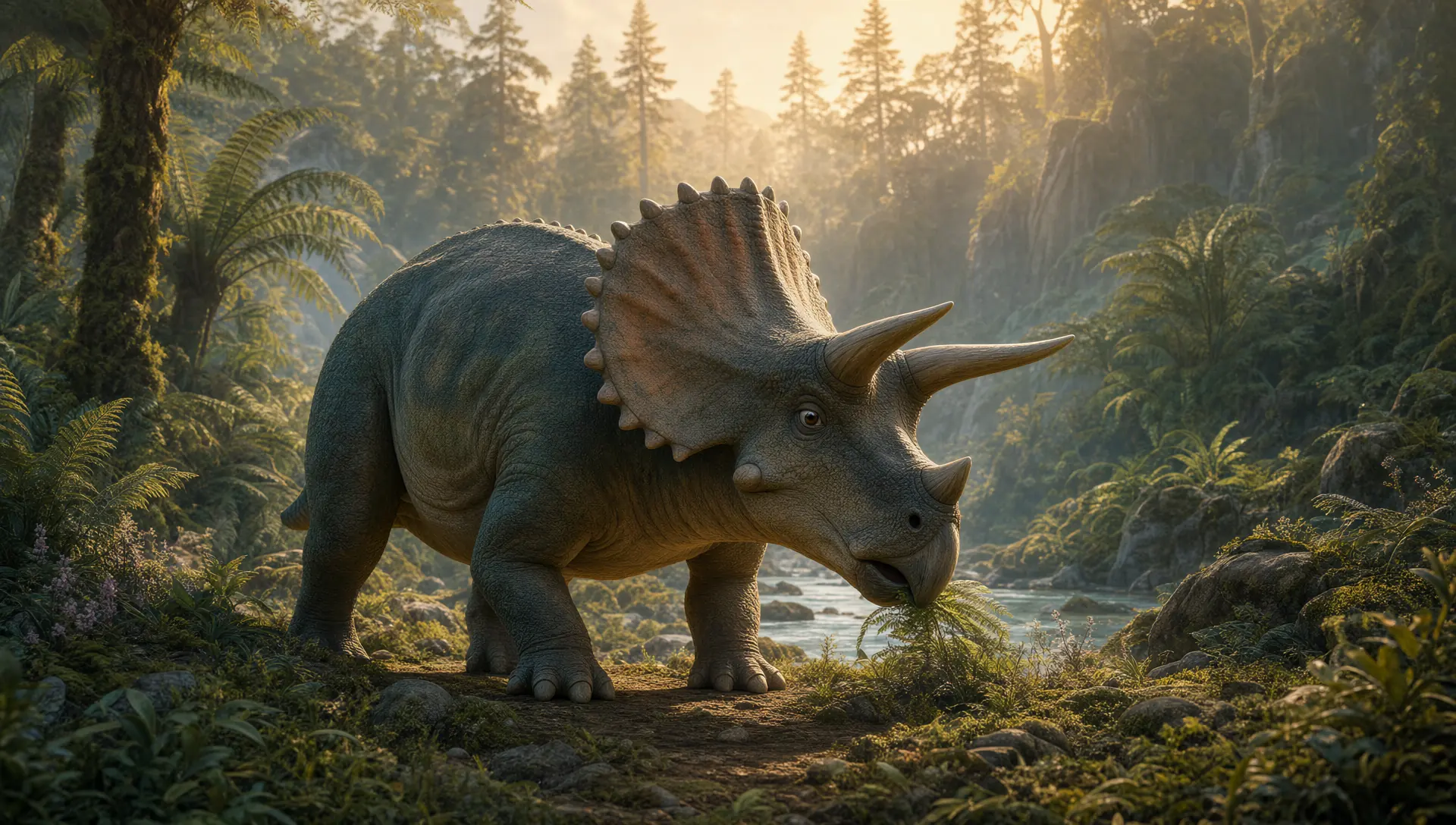
Head down, snipping low plants with its beak.
These are our drawings. Nobody knows what color a real Triceratops was.
For grown-ups
Everything above is cleared for a four-year-old. This is the detail behind it: what is known, what is inferred, what is our design, and what we leave out.
What children take away
Three ideas carry this guide: Triceratops had three horns, a bony frill, and a beak like a parrot’s for eating plants. A child who can say the name, hold up three fingers for the horns and cup their hands behind their head for the frill has the lesson.
Saying the name
The series says try-SERR-uh-tops, with the stress on SERR. The Natural History Museum in London prints tri-SERRA-tops, the same sounds in three chunks; we use four so each chunk matches a beat of the song. The chunks are a teaching aid, not word parts. “Three-horned face” is the meaning of the whole name.
Where the facts come from
Every claim on this page is checked against a museum source and given a confidence level. We separate direct fossil evidence (the horns, the beak, the scales), open questions (what the frill was for), rough child-friendly analogy (an elephant, a door) and artistic design (the colors). We keep the hedges when we write for children.
What we deliberately leave out
Triceratops fossils carry Tyrannosaurus rex bite marks, and some horns show healed injuries from fights with other Triceratops. Both are true and cleared by our sources, but fighting is not part of the story we tell four-year-olds here. Our Triceratops is sturdy and gentle, with its beak closed. Weight and speed numbers are out, and so is any claim about what the frill was for.
Talking about it together
- Ask “How many horns?” and hold up fingers together: two long ones over the eyes, one short one on the nose. Three.
- Cup both hands behind your head with the fingers spread. That is the frill.
- Make a beak with your hand and snip at a leaf. That is how it ate: snip with the beak, grind at the back.
The facts behind each line
Each line, with its evidence
- How big
Bigger than an elephant, with a head as big as a door.
The Natural History Museum gives a length of about 9 meters and a frill nearly a meter across; the Denver Museum describes a six-foot skull. The elephant and the door are rough comparisons. Published weight estimates differ from museum to museum, so this guide gives no weight.
- The name
Its name means three-horned face.
The whole name carries the meaning. The four sound chunks do not mean anything on their own.
- When and where
It lived a very, very long time ago, in the place we now call North America.
Late Cretaceous, about 68 to 66 million years ago. What is now the western USA.
Three horns: two long ones over its eyes, and a short one on its nose.
Triceratops had two long brow horns, one above each eye, and a shorter horn on its snout. The fossil horn cores were covered in keratin in life, so the real horns were longer and sharper than the fossils. The count is direct fossil evidence.
A big bony frill behind its head, like a shield.
A broad bony frill grew from the back of the skull, nearly a meter across in large animals. What it was for is not settled: neck protection, attracting mates and recognizing each other have all been proposed.
A beak like a parrot’s, for snipping plants.
A sharp, parrot-like beak snipped vegetation, and rows of teeth at the back of the jaws formed shearing surfaces for grinding tough plants.
It ate plants.
Triceratops was a herbivore. It probably ate low-growing plants and could raise its head to reach a little higher.
It walked on four thick legs.
Triceratops was a four-legged animal with an upright stance, like a very large grazing animal today.
Pebbly, scaly skin.
Skin impressions show large, pebbled scales. Our artwork follows this.
It often lived alone.
Unlike many other horned dinosaurs, Triceratops remains are usually found individually, which suggests it may have spent much of its life alone. We do not draw herds as fact.
What this guide does not claim
- What it weighed. The published estimates disagree with each other, so we leave weight out rather than pick one.
- How fast it moved. We do not give speeds.
- What the frill was for. Scientists have several ideas and no settled answer.
- Fights with Tyrannosaurus rex. The bite marks are real, but fighting is not a story for a four-year-old.
- That it lived in herds. The Natural History Museum says its remains are usually found alone.
- Its colors. Nobody knows them; see the note on our artwork below.
Our pictures
Our Triceratops’ slate grey-green hide, sandy underside and rust-colored frill are an artistic design, not a reconstruction of real colors. No fossil tells us what color Triceratops was. Its small, blunt cheek knobs are real bones that Triceratops had.
Sources
- Triceratops (Dino Directory), Natural History Museum, London.
- Learning a little more about little Triceratops, Burke Museum of Natural History and Culture.
- When Triceratops Dreams Come True, Denver Museum of Nature & Science.
- Triceratops, Wikipedia.
More to discover
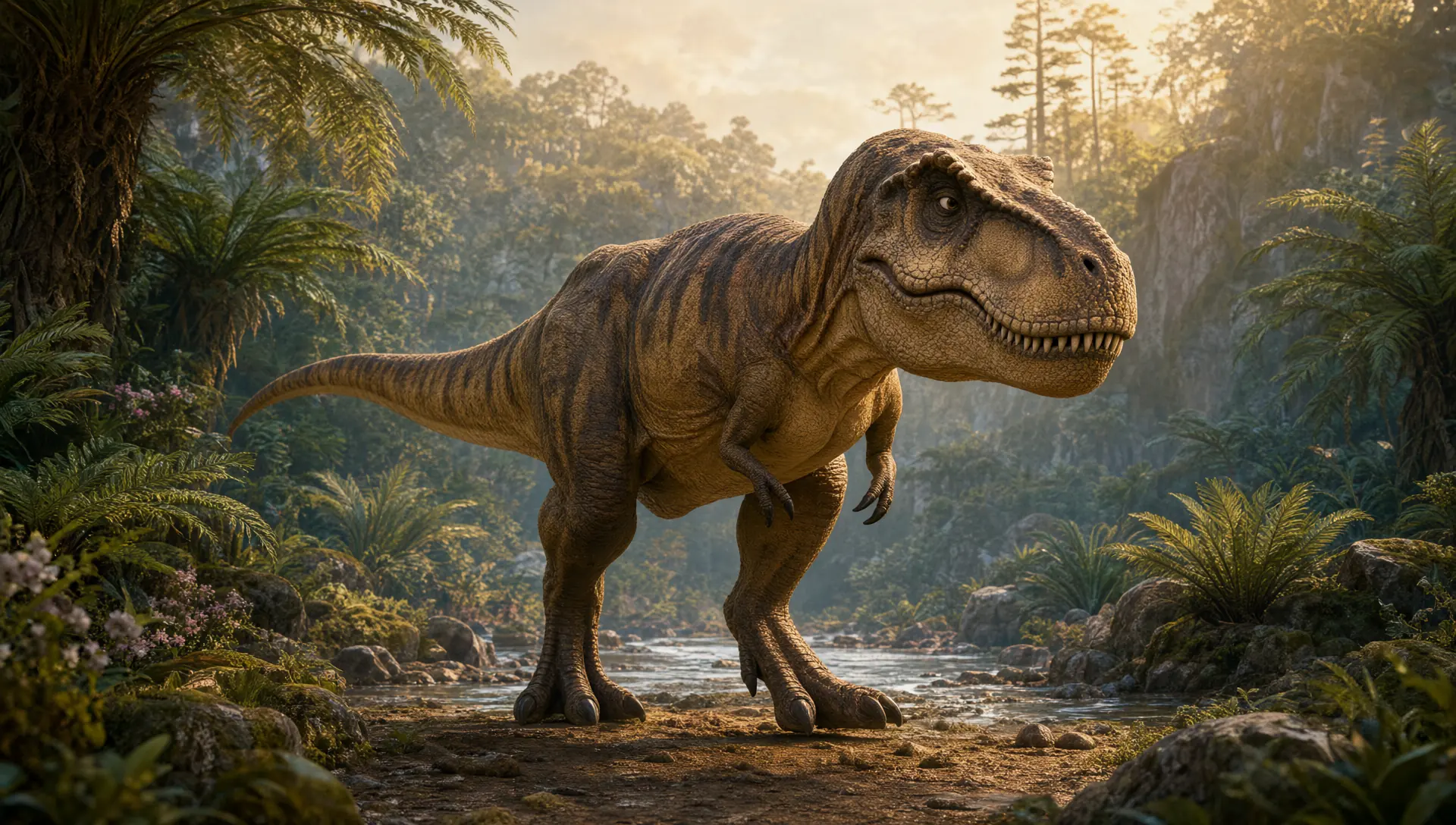
Tyrannosaurus rex
tie-RAN-uh-SORE-us REX
A huge dinosaur with big teeth, tiny arms and a long, heavy tail.